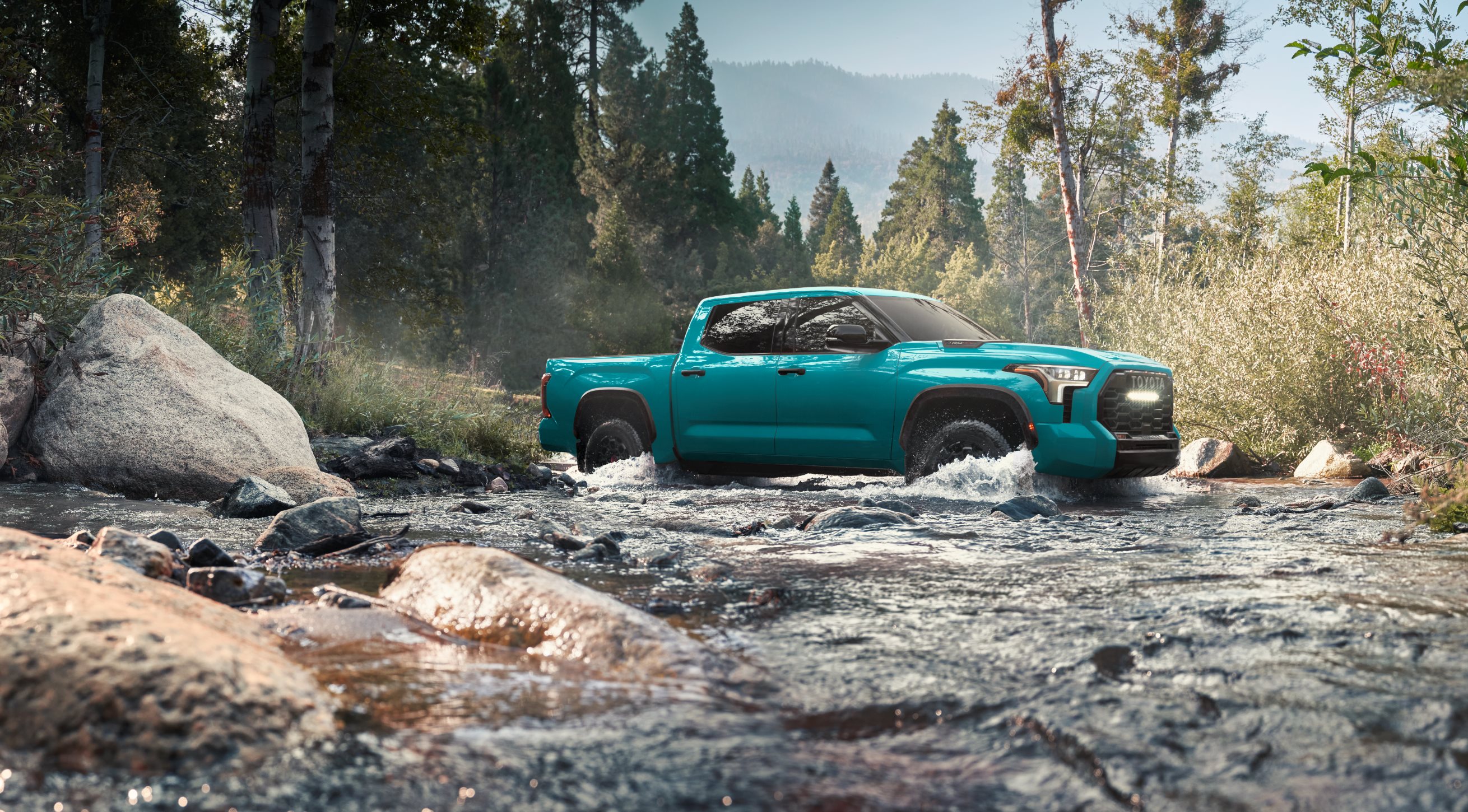
2026 Toyota Tundra vs. 2026 Ford F-150
The 2026 Toyota Tundra and 2026 Ford F-150 are both full-size pickups built for serious work, towing, hauling, and weekend adventure. Compare their powertrains, towing capability, bed utility, off-road equipment, and interior technology to see which truck fits your needs.
Shopping for a full-size pickup means looking at more than maximum numbers. The 2026 Toyota Tundra combines twin-turbo power with available i-FORCE MAX hybrid capability, a standard composite bed, available off-road equipment, and useful towing technology. The 2026 Ford F-150 offers a broad range of engines, strong towing and payload ratings, available PowerBoost hybrid capability, and a wide selection of configurations.
If you're comparing the 2026 Toyota Tundra vs. the 2026 Ford F-150, the right choice comes down to how you plan to use your truck. Here's a closer look at where each pickup stands out.
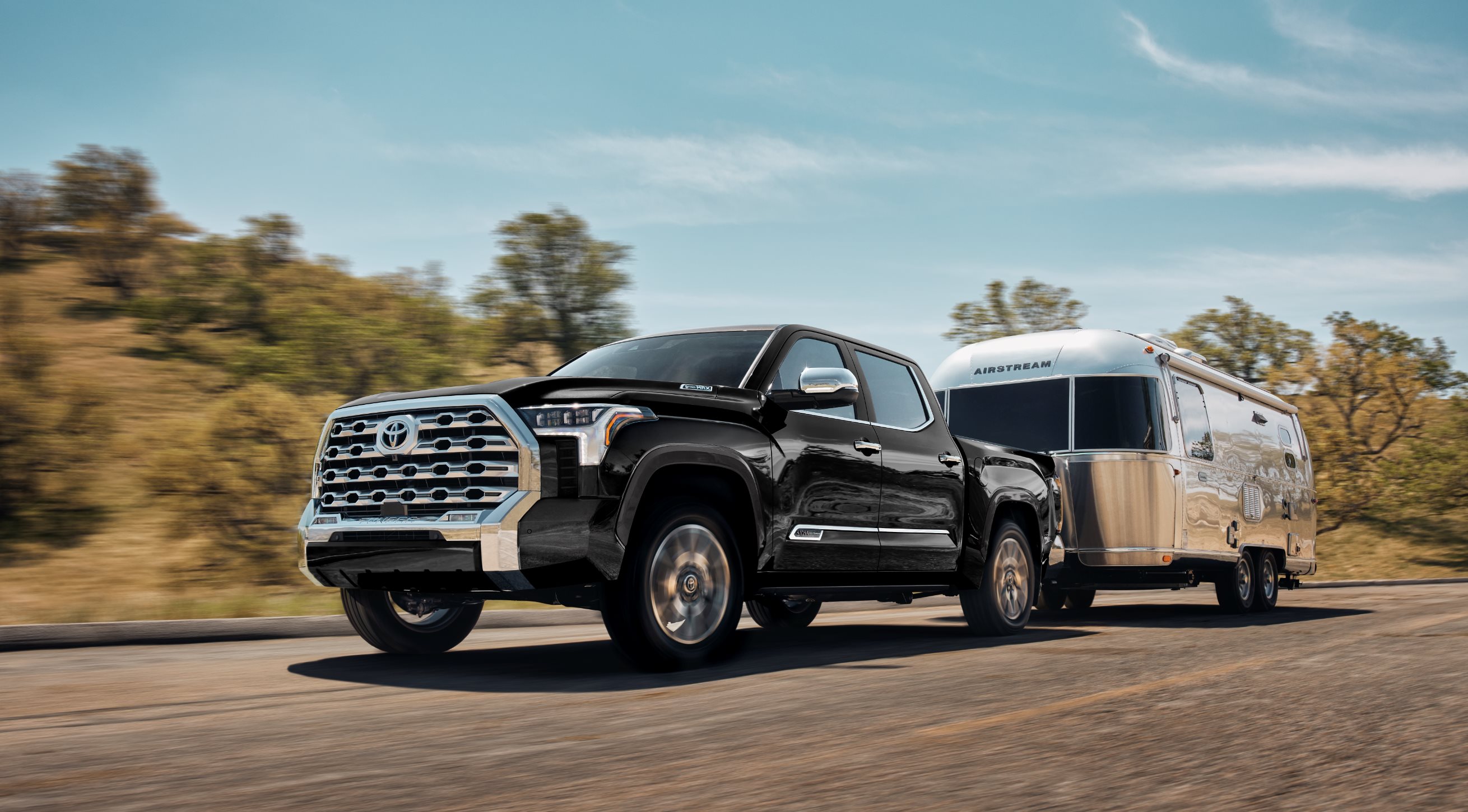
2026 Toyota Tundra
The 2026 Tundra is built around a twin-turbo V6 powertrain with available i-FORCE MAX hybrid capability. The standard i-FORCE engine produces 389 horsepower and 479 lb.-ft. of torque, while the available i-FORCE MAX hybrid powertrain increases output to 437 horsepower and 583 lb.-ft. of torque.
Tundra also brings truck-focused utility to the lineup with a standard composite bed, available 5.5-foot, 6.5-foot, and 8.1-foot bed lengths, and up to 12,000 pounds of available towing capacity depending on configuration.
For drivers who want a full-size truck that can move between work, towing, daily driving, and off-road adventures, the Tundra offers a well-rounded combination of power and versatility.
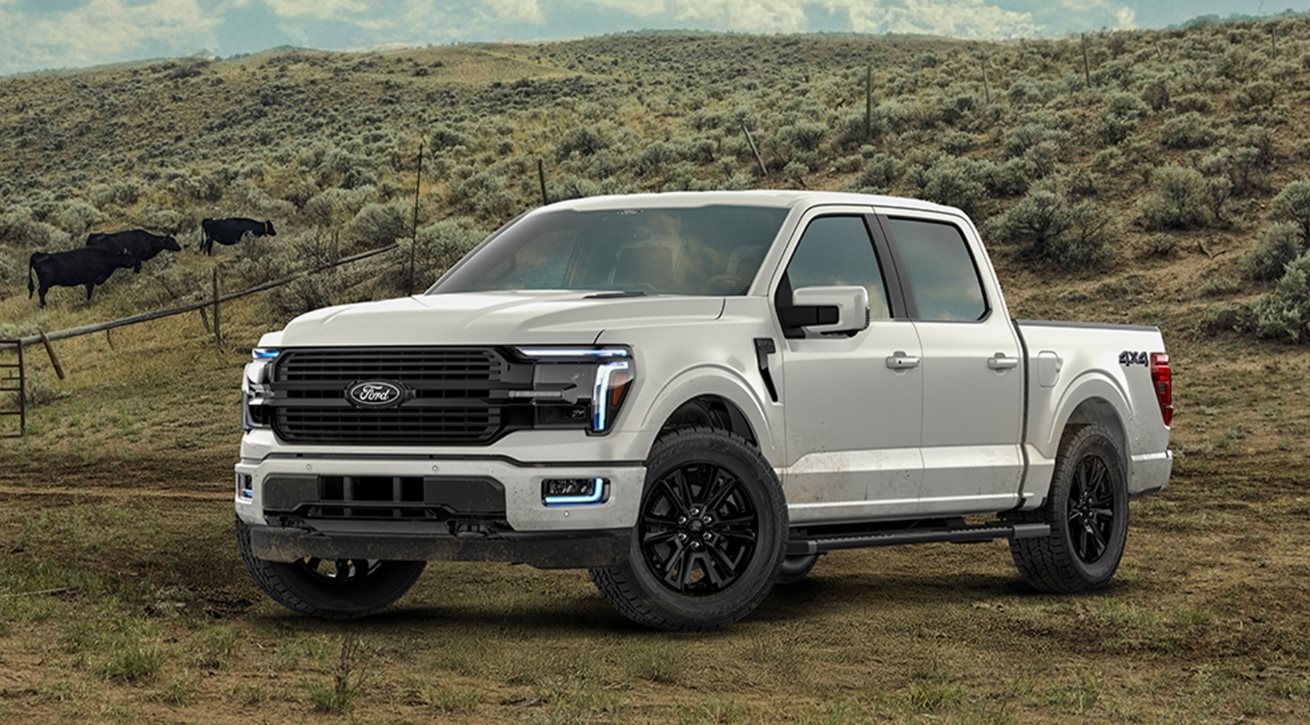
2026 Ford F-150
The 2026 Ford F-150 gives shoppers several powertrain choices, including the 2.7L EcoBoost V6, 3.5L EcoBoost V6, 5.0L V8, and available 3.5L PowerBoost full hybrid V6.
The available PowerBoost hybrid produces 420 horsepower and 570 lb.-ft. of torque, while Ford's 3.5L EcoBoost reaches up to 13,500 pounds of available towing capacity. The F-150 also offers multiple bed and cab configurations for shoppers with different work and hauling requirements.
Ford's F-150 lineup gives shoppers plenty of ways to configure a truck around towing, payload, technology, off-road driving, or everyday use.
2026 Tundra vs. 2026 F-150: Power and Capability
Both trucks offer substantial capability, but Toyota takes an interesting approach with the available i-FORCE MAX hybrid powertrain. Its 437 horsepower and 583 lb.-ft. of torque give the Tundra a strong combination of power and low-end pulling force, while the F-150 offers higher maximum towing and payload ratings in certain configurations.
| Capability | 2026 Toyota Tundra | 2026 Ford F-150 |
|---|---|---|
| Available Hybrid Powertrain | i-FORCE MAX twin-turbo V6 hybrid | 3.5L PowerBoost full hybrid V6 |
| Hybrid Horsepower | 437 hp | 420 hp |
| Hybrid Torque | 583 lb.-ft. | 570 lb.-ft. |
| Maximum Available Towing | 12,000 lbs. | 13,500 lbs. |
| Maximum Available Payload | 1,850 lbs. | 2,440 lbs. |
| Transmission | 10-speed electronically controlled automatic | 10-speed automatic |
Hybrid Power Meets Full-Size Truck Capability
The Tundra's available i-FORCE MAX powertrain is one of its biggest advantages in this comparison. Toyota combines a twin-turbo V6 with an electric motor to produce 437 horsepower and 583 lb.-ft. of torque. The system gives Tundra strong torque output while also supporting a range of truck-focused features, including available 120V/400W AC power and towing technology.
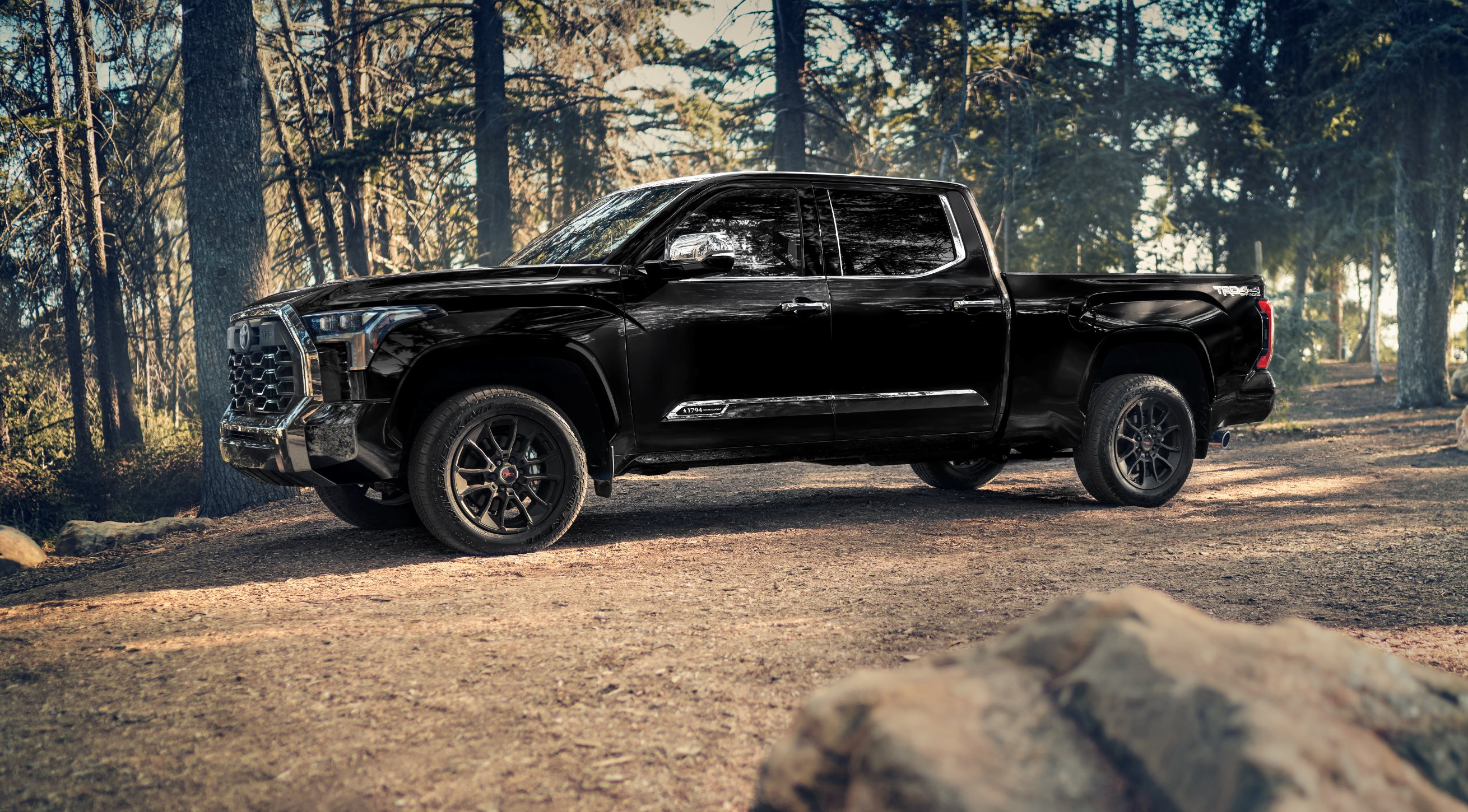
Tundra Bed Utility vs. F-150 Bed Utility
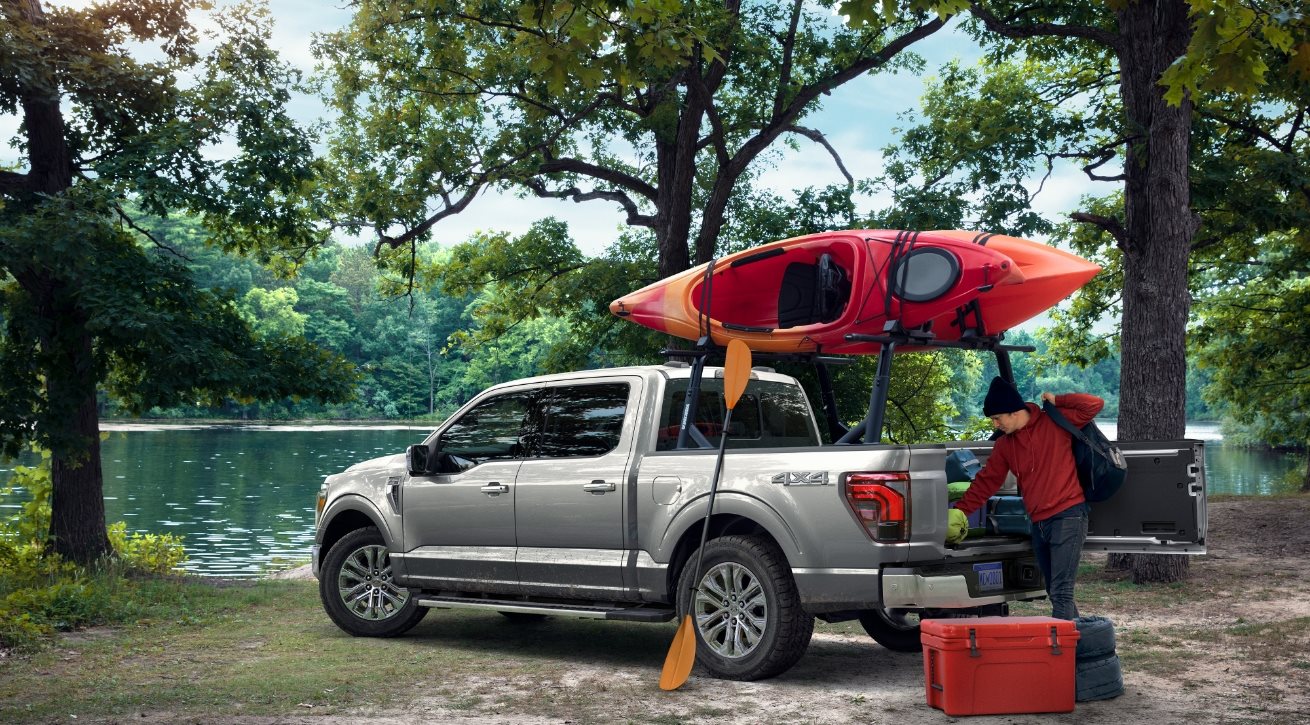
Tundra offers three available bed lengths: 5.5 feet, 6.5 feet, and 8.1 feet. Its composite bed is designed around everyday truck use and adds a durable surface for hauling equipment, recreational gear, and work materials.
Toyota also offers available 120V/400W AC power, bed lighting, and other utility-focused features that can make the truck useful beyond simply carrying cargo. The available 8.1-foot bed gives Tundra shoppers additional room when long cargo is part of the job.
The F-150 offers its own range of bed configurations and available Pro Power Onboard technology, including up to 7.2 kW with the available PowerBoost hybrid system. That makes the Ford especially appealing to shoppers who want substantial onboard electrical output for tools and equipment.
Towing Technology and Trailer Support
Tundra Towing Technology
Tundra offers available Trailer Backup Guide with Straight Path Assist, which uses cameras and sensors to help keep a trailer aligned while backing up. Available towing technology and a 12.3-inch digital gauge cluster also help keep important towing information within view.
F-150 Towing Capability
Ford offers up to 13,500 pounds of available towing capacity on the F-150, depending on configuration. Available Pro Trailer Backup Assist and Pro Trailer Hitch Assist add technology designed to make trailer hookup and maneuvering easier.
Built for Work and Weekend Adventure
The Tundra and F-150 both offer serious capability away from paved roads, but Toyota gives Tundra shoppers a strong selection of dedicated off-road equipment. Available TRD Off-Road and TRD Pro configurations are designed around traction, suspension performance, ground clearance, and trail-focused driving.
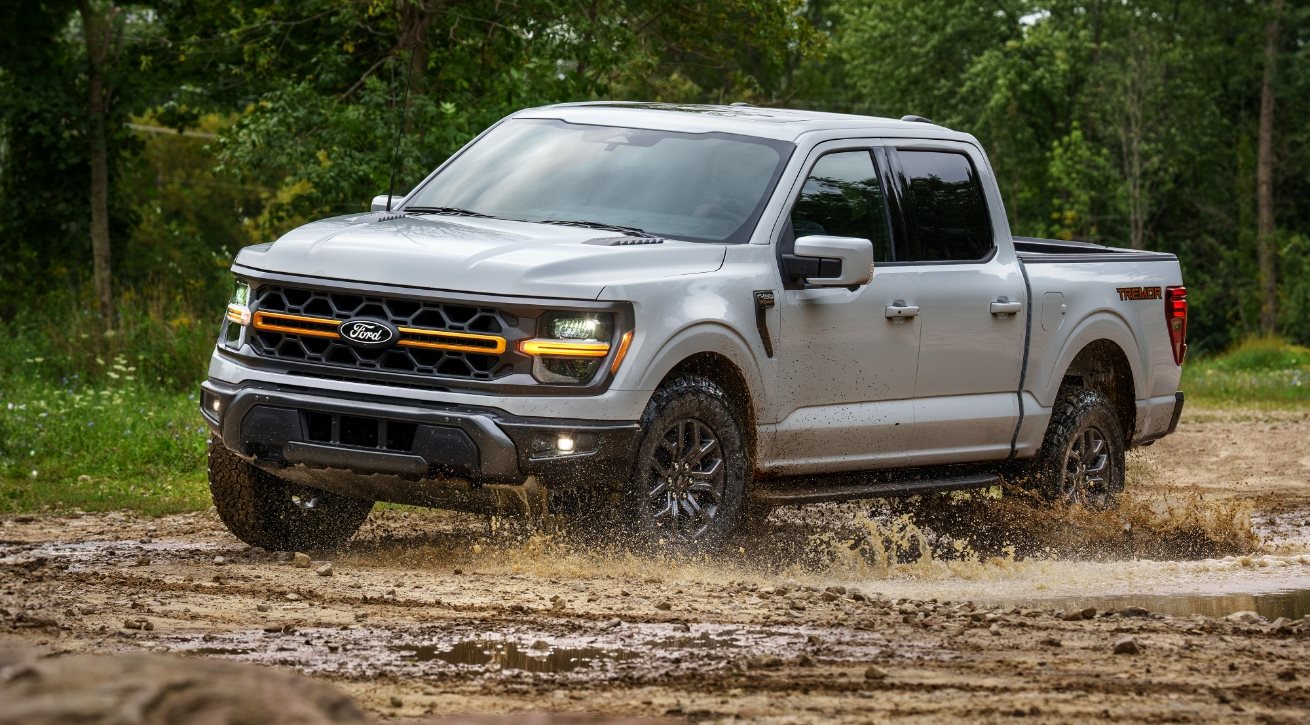
The Tundra TRD Pro adds specialized equipment for demanding terrain, while the F-150 offers available Tremor and Raptor models for shoppers who want more off-road-focused capability. The Raptor takes a more extreme performance-oriented approach, while Tundra TRD Pro offers a blend of trail capability, hybrid power, and full-size truck utility.

Off-Road Capability: Tundra vs. F-150
The Tundra TRD Pro is designed for drivers who want a factory-built truck ready for challenging terrain. Toyota's available off-road equipment includes features such as Multi-Terrain Select and Crawl Control, while the TRD Pro adds specialized suspension and trail-focused hardware.
Ford offers the F-150 Tremor for off-road-oriented driving along with the higher-performance Raptor. The Raptor is particularly focused on high-speed off-road performance, while the Tremor provides a more traditional balance between work capability and trail equipment.
For shoppers who want off-road capability without giving up the everyday usefulness of a full-size pickup, the Tundra's TRD lineup gives Toyota a strong position in this comparison.
Interior Technology: Tundra vs. F-150
Both trucks bring modern technology into the cabin, but Tundra offers a combination of large-screen technology, digital instrumentation, towing information, and available camera systems. The available 14-inch Toyota Audio Multimedia touchscreen and 12.3-inch digital gauge cluster give Tundra a modern command center for daily driving and truck-focused functions.
The F-150 offers a 12-inch center touchscreen, a 12-inch digital productivity display, SYNC 4 technology, and available features such as BlueCruise hands-free highway driving. Ford also offers Pro Power Onboard for shoppers who want to use their truck as a mobile power source.
| Technology & Utility | 2026 Toyota Tundra | 2026 Ford F-150 |
|---|---|---|
| Largest Available Center Display | 14-inch Toyota Audio Multimedia touchscreen | 12-inch center touchscreen |
| Digital Gauge / Driver Display | Available 12.3-inch digital gauge cluster | 12-inch digital productivity display |
| Onboard Power | Available 120V/400W AC power | Available Pro Power Onboard up to 7.2 kW |
| Camera Technology | Available Panoramic View Monitor | Available towing and camera technologies depending on configuration |
| Trailer Technology | Available Trailer Backup Guide with Straight Path Assist | Available Pro Trailer Backup Assist and Pro Trailer Hitch Assist |
Which Full-Size Truck Fits Your Needs?
The 2026 Toyota Tundra makes a strong case for drivers who want a full-size pickup with available hybrid power, substantial torque, a durable composite bed, dedicated TRD off-road models, and a modern technology package. The available i-FORCE MAX powertrain is especially appealing for shoppers who want hybrid capability without stepping away from traditional truck performance.
The 2026 Ford F-150 gives shoppers a broad range of configurations and powertrains. Its higher maximum towing and payload ratings can make it a strong fit for drivers who regularly work near the upper end of those limits, while available PowerBoost hybrid technology and Pro Power Onboard add additional flexibility.
For many Hemet-area drivers, the Tundra offers a well-rounded package. Its combination of available i-FORCE MAX power, truck-bed utility, off-road capability, towing technology, and interior technology makes it a pickup worth a close look before making a decision.
You can also compare the official Toyota Tundra specifications and the Ford F-150 specifications as you narrow down your options.
2026 Toyota Tundra vs. 2026 Ford F-150: At a Glance
Here's a quick look at several key power, towing, payload, and utility figures for the 2026 Tundra and 2026 F-150.
2026 Toyota Tundra
437 hp
Horsepower with available i-FORCE MAX hybrid
583 lb.-ft.
Torque with available i-FORCE MAX hybrid
12,000 lbs.
Maximum available towing capacity
5.5-, 6.5- or 8.1-ft.
Available bed lengths depending on configuration
2026 Ford F-150
420 hp
Horsepower with available PowerBoost hybrid
570 lb.-ft.
Torque with available PowerBoost hybrid
13,500 lbs.
Maximum available towing capacity
Up to 2,440 lbs.
Maximum available payload capacity
Compare the 2026 Tundra in Hemet
Comparing the 2026 Toyota Tundra with the 2026 Ford F-150 is easier when you can see the Tundra's available configurations, features, and equipment in person. Toyota of Hemet can help local shoppers explore the current Tundra lineup and learn more about available truck options.
If you're shopping from Hemet, Menifee, San Jacinto, Perris, or surrounding Inland Empire communities, explore the new Tundra inventory or contact Toyota of Hemet to learn more about the 2026 Tundra.
Explore the 2026 Toyota Tundra at Toyota of Hemet
See how the 2026 Tundra fits your needs and compare available configurations, features, and equipment with the current Toyota lineup at Toyota of Hemet.